What is a Work-for-Hire Agreement?
A work-for-hire agreement is a legally binding contract that specifies the ownership of intellectual property rights between an employer and a contractor or freelancer. In this agreement, the hiring party retains full rights to use, modify, and distribute the work created by the contractor without requiring further permission.
Table of Contents
This ensures that the employer has complete control over the intellectual property developed by the contractor, preventing any ownership disputes in the future.
The Importance of a Work-for-Hire Agreement
Work-for-hire agreements play a vital role in protecting intellectual property rights for businesses and individuals engaging contractors or freelancers. By clearly defining ownership rights from the outset, these agreements ensure that the employer has the necessary legal protection to use, modify, and distribute the work without any restrictions.
Legal Protection for Employers
One of the primary benefits of a work-for-hire agreement is that it offers legal protection for employers by establishing their ownership of the intellectual property developed by contractors. This protection is essential in industries where original creative work is a core asset.
Prevention of Ownership Disputes
A well-crafted work-for-hire agreement helps prevent ownership disputes that may arise between employers and contractors. By clearly defining ownership rights upfront, both parties have a clear understanding of their respective roles and responsibilities regarding the work created.
Facilitation of Business Transactions
Having a work-for-hire agreement in place can facilitate smoother business transactions, particularly when it comes to the use and licensing of intellectual property. With a clear delineation of ownership rights, employers can confidently enter into agreements with third parties knowing they have full control over the work created.
Enhanced Creativity and Innovation
By providing a framework for the ownership of intellectual property, work-for-hire agreements can also foster creativity and innovation within the working relationship. Contractors and freelancers may feel more empowered to explore new ideas and concepts, knowing that their work is protected and valued by the employer.
Building Trust and Long-Term Relationships
Establishing clear ownership rights through a work-for-hire agreement helps build trust between employers and contractors. When both parties are confident in their respective roles and responsibilities, it can lead to long-term working relationships based on mutual respect and understanding.
Compliance with Legal Requirements
In many cases, having a work-for-hire agreement is not just a best practice but a legal requirement. Certain jurisdictions and industries mandate the use of such agreements to protect intellectual property rights and ensure compliance with relevant laws and regulations.
Work-for-hire vs. Independent Contractor
It is essential to differentiate between a work-for-hire agreement and an independent contractor relationship to understand the implications for ownership of intellectual property rights.
Work-for-Hire Agreement
In a work-for-hire agreement, the hiring party retains full ownership of the work created by the contractor. This means that the employer has the right to use, modify, and distribute the work without further permission from the contractor.
Independent Contractor Relationship
In contrast, an independent contractor retains the rights to their work unless specifically stated otherwise in a contract. This means that the contractor may have the ability to license or sell their work to other parties unless there is a clear agreement on ownership rights.
Determining Ownership Rights
The distinction between a work-for-hire agreement and an independent contractor relationship is critical in determining who holds the rights to the work created and how it can be used. Employers must carefully consider the implications of each arrangement when engaging contractors or freelancers.
Clarifying Ownership Rights
By clearly defining ownership rights in a work-for-hire agreement, employers can avoid potential misunderstandings or disputes over the use of intellectual property. This clarity is essential for both parties to operate effectively within the terms of the contract.
Flexibility in Licensing
Depending on the nature of the work and the specific requirements of the employer, a work-for-hire agreement may offer more flexibility in licensing and using the intellectual property. Employers can rest assured that they have full control over the work created, allowing them to exploit it as needed.
Who Should Use Work-for-Hire Contracts?
Work-for-hire contracts are essential for businesses and individuals across various industries that regularly engage contractors or freelancers to create intellectual property.
Creative Industries
Industries such as software development, graphic design, writing, and marketing rely heavily on the creative output of contractors and freelancers. For businesses in these sectors, work-for-hire agreements are crucial in protecting the intellectual property rights associated with their creative work.
Technology Companies
Technology companies that develop software, applications, or digital products often work with external contractors to enhance their offerings. By using work-for-hire agreements, these companies can ensure that they have full ownership and control over the intellectual property developed during the engagement.
Media and Entertainment
In the media and entertainment industry, where content creation is central to the business, work-for-hire agreements are common practice. By securing ownership rights through these agreements, production companies, artists, and creators can protect their work and monetize it effectively.
Marketing and Advertising Agencies
Marketing and advertising agencies frequently collaborate with freelance creatives to develop campaigns, branding materials, and content. By implementing work-for-hire agreements, these agencies can safeguard the intellectual property rights associated with their client projects and campaigns.
Startups and Small Businesses
Startups and small businesses that rely on external talent to support their operations can benefit greatly from using work-for-hire agreements. These agreements provide the legal framework necessary to protect the intellectual property rights of the business and ensure seamless collaboration with contractors and freelancers.
What Should a Work-for-Hire Agreement Include?
A well-drafted work-for-hire agreement should cover essential aspects of the working relationship and ownership rights to ensure clarity and protection for both parties involved.
Scope of Work
The agreement should clearly outline the tasks, deliverables, and responsibilities expected from the contractor. This includes a detailed description of the work to be performed and any specific requirements or deadlines.
Payment Terms
Specify the payment structure, including the agreed-upon rate, payment schedule, and any milestones or deadlines for payment. It’s essential to clarify how and when the contractor will be compensated for their services.
Transfer of Rights
The most critical aspect of a work-for-hire agreement is the transfer of intellectual property rights. Clearly state that the work created by the contractor is considered a “work made for hire” and that all rights belong to the hiring party. This ensures that the employer has full ownership and control over the work.
Confidentiality
Include provisions for maintaining the confidentiality of any sensitive information shared during the engagement. This may involve outlining how confidential information should be handled, stored, and protected to prevent unauthorized disclosure.
Indemnification
Address issues of indemnification to protect both parties from legal liability arising from the work performed. This may involve specifying who is responsible for any legal claims, damages, or losses resulting from the contractor’s work or actions during the engagement.
Dispute Resolution
Detail the process for resolving any disputes that may arise during the contract
Having a clear dispute resolution mechanism in the work-for-hire agreement can help prevent disagreements from escalating into costly legal battles. By outlining a process for resolving disputes, both parties can address any issues in a timely and efficient manner, preserving the working relationship.
Non-Compete and Non-Disclosure Agreements
In some cases, it may be necessary to include non-compete and non-disclosure agreements within the work-for-hire agreement. Non-compete agreements restrict contractors from working for competitors or starting a similar business for a specified period after the engagement, while non-disclosure agreements protect sensitive information from being shared or used inappropriately.
Termination Clause
Include a termination clause that outlines the circumstances under which the contract can be terminated by either party. This clause should specify the notice period required for termination, the reasons for termination, and any repercussions or obligations upon termination of the agreement.
Insurance and Liability
Consider including provisions related to insurance and liability coverage in the work-for-hire agreement. This may involve specifying the type and amount of insurance coverage required for the contractor, as well as detailing how liability for any damages or losses will be handled during the engagement.
Governing Law
Specify the governing law that will apply to the work-for-hire agreement. This ensures that any legal disputes or interpretation issues are resolved according to the laws of a particular jurisdiction, providing clarity and consistency in the event of a legal dispute.
Severability Clause
Include a severability clause in the agreement to ensure that if any provision is found to be unenforceable or invalid, the rest of the agreement remains in effect. This clause helps protect the overall validity of the contract and ensures that the parties’ intentions are still upheld.
Signatures and Date
Finally, ensure that the work-for-hire agreement is signed by both parties and dated to indicate their acceptance and agreement to the terms outlined in the contract. Signatures authenticate the document and create a legally binding agreement between the employer and the contractor.
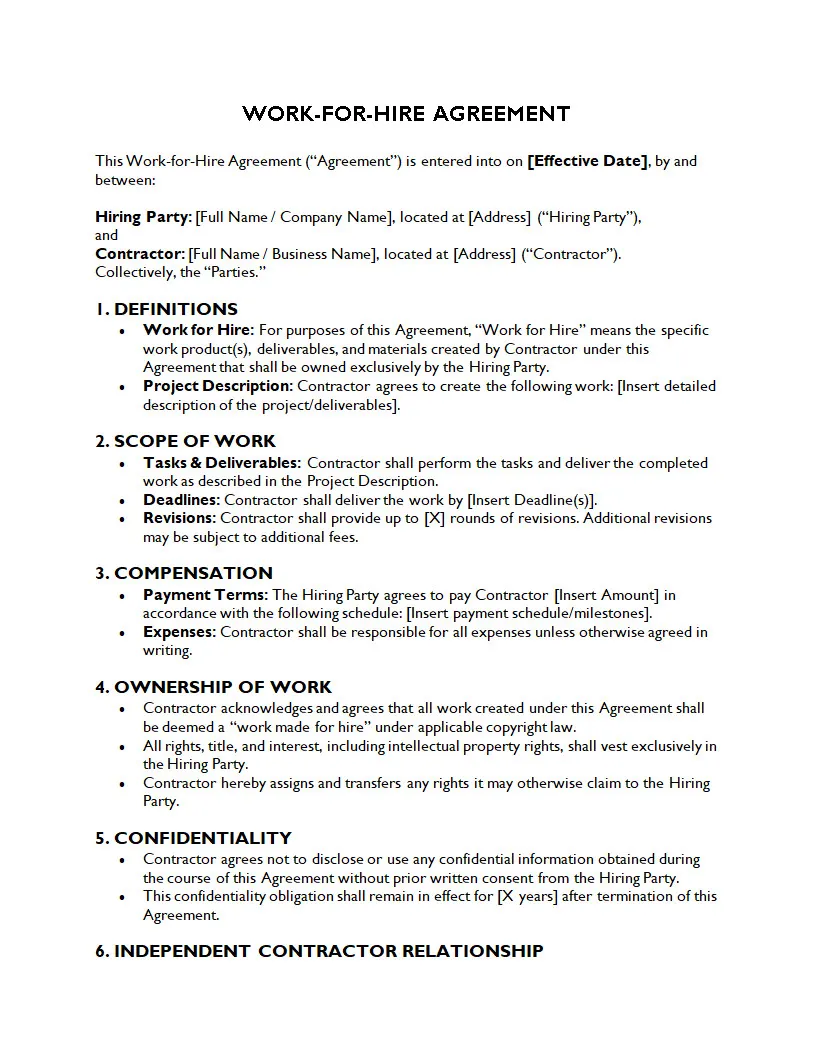
Work-for-hire Agreement Template
A Work-for-Hire Agreement helps clearly define ownership rights, responsibilities, and expectations when hiring an individual or contractor to create work on your behalf. It specifies that all work produced is owned by the hiring party, while also outlining the scope of work, payment terms, deadlines, and confidentiality provisions. With a well-structured template, you can protect your intellectual property, avoid disputes, and ensure a smooth professional relationship.
Download our Work-for-Hire Agreement Template today to secure your rights and create clear, reliable agreements with confidence.
Work-for-hire Agreement Template – WORD