In today’s fast-paced business environment, accurate record-keeping is crucial for the smooth functioning of any organization. Work timesheets play a vital role in providing an accurate record of employee work hours for essential business functions like payroll processing, client billing, and legal compliance.
Table of Contents
Moreover, timesheets serve as a tool for managing projects, tracking productivity, analyzing performance, and making informed decisions about resource allocation and operational efficiency.
What are Work Timesheets?
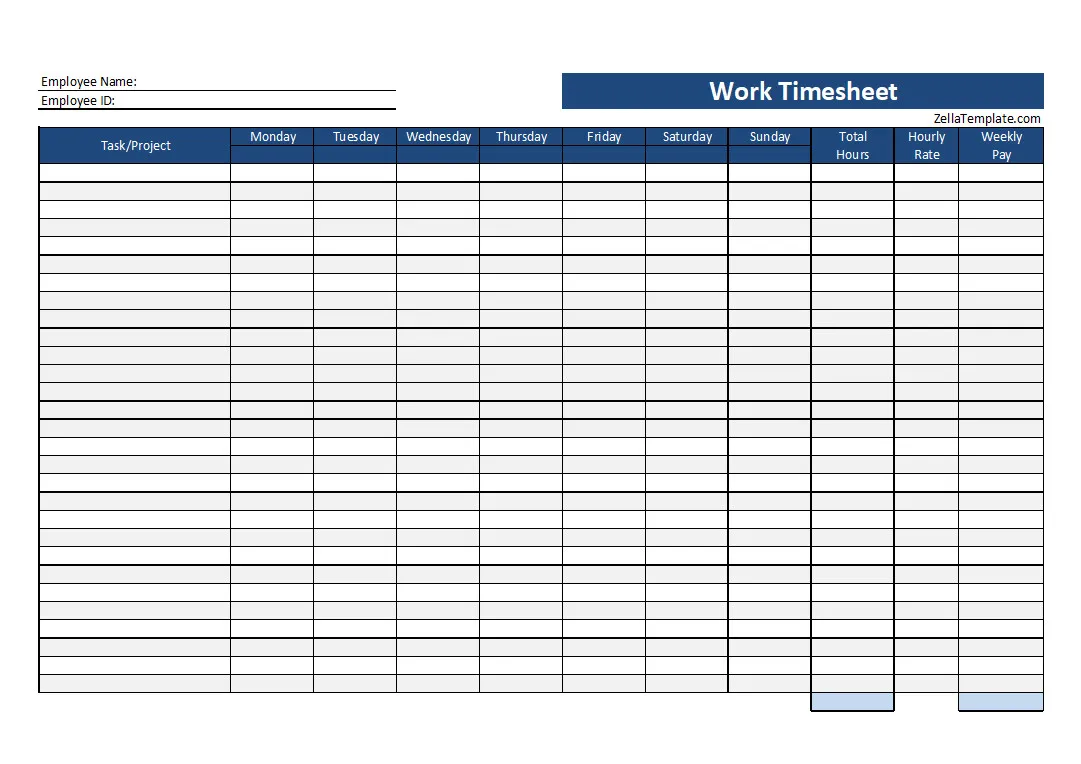
Work timesheets are documents used to record the number of hours an employee has worked during a specific period. These timesheets typically include information such as the employee’s name, the date, start and end times of work, breaks taken, and total hours worked.
Timesheets can be filled out manually or through digital tools like time tracking software.
Why are Work Timesheets Important?
Work timesheets are important for several reasons.
Ensuring Compliance with Labor Laws
One of the key reasons why work timesheets are essential is to ensure compliance with labor laws and regulations. By accurately tracking and recording employee work hours, businesses can demonstrate compliance with laws regarding overtime pay, breaks, and other labor-related regulations. Timesheets serve as a vital tool for businesses to avoid legal issues and penalties related to labor law violations.
Accurate Payroll Processing
Accurate payroll processing is another critical aspect of why work timesheets are important. By recording and tracking employee work hours through timesheets, businesses can calculate payroll accurately and ensure that employees are paid for the hours they have worked. Timesheets help businesses avoid payroll errors, discrepancies, and disputes by providing a clear record of employee work hours.
Monitoring Project Progress
Work timesheets play a crucial role in monitoring project progress and tracking the time spent on various tasks. By recording the time spent by employees on different projects and tasks, businesses can analyze performance, identify bottlenecks, and make informed decisions about resource allocation. Timesheets provide valuable insights into project timelines, budgeting, and overall project efficiency.
Key Elements of Work Timesheets
Work timesheets typically include the following key elements:
Employee Information
Employee information is a crucial element of work timesheets. This includes details such as the employee’s name, department, position, and employee ID. By including this information on timesheets, businesses can accurately track and record the work hours of individual employees.
Date and Time
The date and time section of a timesheet captures the specific dates and times when an employee has worked. This information is essential for accurately recording work hours, calculating total hours worked, and ensuring compliance with labor laws regarding breaks and overtime.
Breaks
Breaks taken by employees during work hours are typically included in timesheets. By recording break times, businesses can ensure that employees take sufficient breaks as required by labor laws and regulations. Monitoring breaks also helps businesses maintain productivity levels and employee well-being.
Total Hours Worked
The total hours worked section of a timesheet calculates the overall hours worked by an employee during a specific period. This information is crucial for accurate payroll processing, client billing, and project management. By calculating total hours worked, businesses can determine employee productivity and project timelines.
How to Use Work Timesheets Effectively
To use work timesheets effectively, businesses should follow these tips:
Implement a Digital Time Tracking System
Implementing a digital time tracking system can streamline the process of recording and tracking employee work hours. Digital solutions offer automation features, real-time tracking, and reporting capabilities that make it easier for businesses to manage timesheets efficiently.
Require Daily Timesheet Submission
Encouraging employees to submit their timesheets daily can ensure timely and accurate record-keeping. By requiring daily timesheet submission, businesses can avoid delays, errors, and discrepancies in time tracking. Regular submission also allows for better monitoring of employee work hours.
Review and Approve Timesheets Regularly
Regularly reviewing and approving timesheets is essential to address any discrepancies or errors promptly. By reviewing timesheets regularly, businesses can spot inaccuracies, missing information, or inconsistencies in time tracking. Approving timesheets promptly ensures that payroll processing and client billing are done accurately.
Provide Training on Timesheet Use
Training employees on how to accurately fill out timesheets is crucial for maintaining consistency and accuracy. By providing training on timesheet use, businesses can ensure that employees understand the importance of accurate time tracking, how to fill out timesheets correctly, and how to use time tracking software effectively.
Track Project Hours and Budgets
Using timesheets to track project hours and budgets is essential for effective project management. By recording the time spent by employees on different projects, businesses can monitor project progress, identify potential delays, and manage project budgets effectively. Timesheets provide valuable data for project planning and resource allocation.
Best Practices for Work Timesheet Management
To effectively manage work timesheets, businesses should follow these best practices:
Automate Time Tracking Processes
Implementing automated time tracking solutions can streamline the process of managing work timesheets. By using time tracking software, businesses can automate time entry, calculation, and reporting, saving time and reducing errors in time tracking.
Encourage Transparency and Accountability
Promoting transparency and accountability in time tracking is essential for accurate timesheet management. Encourage employees to track their time honestly, report any discrepancies or errors, and communicate openly about time tracking practices. Transparency helps maintain the integrity of timesheet data and builds trust within the organization.
Provide Regular Feedback and Training
Offering regular feedback and training on timesheet management can help employees understand the importance of accurate time tracking. Guide how to fill out timesheets correctly, use time tracking software effectively, and address any issues or questions related to time tracking. Regular training ensures that employees are equipped with the knowledge and skills to manage timesheets effectively.
Monitor Timesheet Compliance and Accuracy
Regularly monitoring timesheet compliance and accuracy is crucial for maintaining data integrity and legal compliance. Conduct audits of timesheet records, review timesheets for accuracy and completeness, and address any discrepancies or errors promptly. Monitoring timesheet data ensures that businesses have reliable data for payroll processing, client billing, and project management.
Integrate Timesheet Data with Business Systems
Integrating timesheet data with other business systems can improve data visibility and efficiency. By integrating timesheet data with payroll systems, project management tools, and accounting software, businesses can streamline processes, reduce manual data entry, and ensure data consistency across different systems. Integrating timesheet data allows for seamless data transfer, real-time reporting, and better decision-making based on accurate and up-to-date information.
Set Clear Guidelines and Policies
Establishing clear guidelines and policies for timesheet management is essential for consistency and compliance. Define expectations for time tracking, outline the consequences of inaccurate reporting, and communicate the importance of timesheet accuracy to employees. Clear guidelines help employees understand their responsibilities and ensure uniformity in time tracking practices.
Regularly Review and Analyze Timesheet Data
Regularly reviewing and analyzing timesheet data can provide valuable insights into employee productivity, project progress, and operational efficiency. Analyze timesheet data to identify trends, track performance metrics, and make data-driven decisions about resource allocation and project management. Regular analysis of timesheet data helps businesses optimize workflows and improve overall productivity.
Provide Time Tracking Training to Employees
Offering time tracking training to employees can help improve accuracy and efficiency in timesheet management. Train employees on how to use time tracking software, fill out timesheets correctly, and report time accurately. Providing training on time tracking best practices ensures that employees understand the importance of accurate time tracking and are equipped with the skills to manage timesheets effectively.
Implement Timesheet Approval Processes
Implementing timesheet approval processes can help ensure the accuracy and completeness of timesheet data. Establish clear procedures for timesheet submission, review, and approval, ensuring that timesheets are verified by supervisors or managers before processing. Approval processes help validate timesheet data, address any discrepancies, and maintain data integrity for payroll processing and project management.
Conclusion
In conclusion, work timesheets are a crucial tool for businesses to track employee work hours, manage projects, monitor productivity, and make informed decisions about resource allocation and operational efficiency.
By accurately recording and analyzing employee work hours through timesheets, businesses can ensure compliance with labor laws, improve payroll processing accuracy, track project progress effectively, and enhance overall productivity. Implementing best practices for work timesheet management, integrating timesheet data with business systems, and providing training to employees can help businesses maximize the benefits of using work timesheets.
Work timesheets are not just a record of hours worked but a valuable tool for driving business success and achieving organizational goals.
Work Timesheet Template – Excel