Work orders are an essential tool in any organization, serving as a formal request, authorization, and documentation for specific jobs such as maintenance or repair.
Table of Contents
By providing clear instructions, assigning responsibility, detailing required resources, setting timelines, and tracking completion, work orders ensure that tasks are done efficiently, accountably, and with a full record for future reference and analysis. They act as a central communication tool, streamlining operations by turning requests into actionable steps for teams.
What is a Work Order?
A work order is a formal document that outlines the details of a specific job that needs to be completed within an organization.
It serves as a request for work to be done, providing clear instructions on what needs to be accomplished, who is responsible for completing the task, what resources are required (such as labor and parts), the timeline for completion, and a system for tracking progress and completion.
Why are Work Orders Important?
Work orders play a crucial role in ensuring that tasks are completed efficiently and effectively within an organization. By providing a clear outline of the work to be done, assigning responsibility, and setting timelines, work orders help to streamline operations and minimize confusion or miscommunication. They also serve as a record of work completed, providing valuable data for future reference and analysis.
Efficiency and Accountability
One of the primary reasons work orders are important is that they promote efficiency and accountability within an organization. By clearly outlining the tasks to be completed and assigning responsibility, work orders ensure that work is done promptly and that individuals are held accountable for their assigned tasks.
Resource Management
Work orders are essential for effective resource management within an organization. By detailing the resources required to complete a task, such as labor, parts, equipment, or tools, work orders help ensure that the necessary resources are available when needed and that resources are allocated efficiently.
Tracking and Analysis
Work orders provide a valuable tool for tracking progress and analyzing completed work within an organization. By documenting the details of each task, including timelines and resources used, work orders create a record that can be used for future analysis, process improvement, and decision-making.
Compliance and Documentation
Work orders also play a crucial role in compliance and documentation within organizations. By formalizing requests and authorizations for work, organizations can ensure that tasks are completed according to established protocols, regulations, and standards. Work orders also provide a documented history of work completed, which can be useful for audits and legal purposes.
What to Include in a Work Order?
When creating a work order, it is essential to include several key components to ensure that the job is completed successfully. These components typically include:
Detailed Description
The detailed description of the work to be done is a critical component of a work order. This section should clearly outline the tasks to be completed, the objectives of the work, and any specific instructions or requirements for completing the job. The more detailed and specific the description, the easier it will be for the assigned individual or team to understand and execute the task.
Assigned Responsibility
Assigning responsibility is another essential element of a work order. Clearly specifying who is responsible for completing each task helps ensure accountability and prevents confusion about roles and responsibilities. By assigning responsibility upfront, organizations can streamline task completion and minimize delays or misunderstandings.
Required Resources
Detailing the resources required to complete a task is crucial for effective work order management. This section should include a list of the labor, parts, equipment, tools, or any other resources needed to complete the job. By outlining resource requirements in advance, organizations can ensure that the necessary resources are available when needed and that tasks can be completed efficiently.
Timeline
Setting a clear timeline for task completion is essential for effective work order management. The timeline should specify when the work needs to be completed and any milestones or deadlines along the way. By establishing a realistic and achievable timeline, organizations can ensure that tasks are completed on time and that projects stay on track.
Tracking Mechanism
Establishing a system for tracking progress and completion of work is critical for effective work order management. This may involve using software or tools to monitor the status of tasks, track resource usage, and identify any potential delays or issues. By implementing a tracking mechanism, organizations can stay informed about the progress of work orders and take action to address any challenges that arise.
How to Create an Effective Work Order
Creating an effective work order requires careful planning and attention to detail. Follow these steps to ensure that your work orders are clear, concise, and actionable:
Define the Scope
When creating a work order, it’s essential to define the scope of work clearly. This includes outlining the specific tasks to be completed, the objectives of the work, and any deliverables or outcomes expected. By defining the scope upfront, you can ensure that everyone involved understands what needs to be done and can work towards a common goal.
Assign Responsibility
Assigning responsibility is crucial for effective work order management. Clearly specify who is responsible for each task within the work order to ensure that accountability is established and that tasks are completed as expected. By assigning responsibility upfront, you can prevent confusion about roles and responsibilities and streamline the task completion process.
Detail Required Resources
Detailing the resources required to complete a task is essential for effective work order management. This includes identifying the labor, parts, equipment, tools, or any other resources needed to complete the job. By specifying resource requirements upfront, you can ensure that the necessary resources are available when needed and that tasks can be completed efficiently.
Set Realistic Timelines
Setting realistic timelines for task completion is crucial for effective work order management. The timeline should outline when the work needs to be completed and any milestones or deadlines along the way. By establishing achievable timelines, you can ensure that tasks are completed on time and that projects stay on track without unnecessary delays.
Track Progress
Implementing a system for tracking progress and completion of work is essential for effective work order management. This may involve using software or tools to monitor the status of tasks, track resource usage, and identify any potential delays or issues. By tracking progress, you can stay informed about the status of work orders and take action to address any challenges that arise.
Tips for Maximizing the Effectiveness of Work Orders
To ensure that your work orders are as effective as possible, consider the following tips:
Provide Clear Instructions
When creating work orders, it’s essential to provide clear and concise instructions. Ensure that all instructions are easy to understand and follow, using simple language and avoiding jargon or technical terms that may confuse. Clear instructions help ensure that tasks are completed correctly and efficiently.
Communicate Expectations
Clearly communicate expectations to those involved in completing the work order. This includes outlining what is expected in terms of quality, deadlines, and any specific requirements for the task. By communicating expectations upfront, you can ensure that everyone is on the same page and working towards a common goal.
Encourage Collaboration
Foster open communication and collaboration among team members involved in completing a work order. Encouraging collaboration helps ensure that tasks are completed efficiently and that any potential issues or challenges are addressed promptly. By working together, teams can leverage their collective skills and knowledge to achieve successful outcomes.
Regularly Review and Update
Periodically review and update work orders to ensure they remain relevant and accurate. As tasks progress or conditions change, it’s important to revisit work orders and make any necessary adjustments to ensure that they reflect the current status and requirements of the job. Regular reviews help prevent misunderstandings and keep tasks on track.
Free Work Order Template
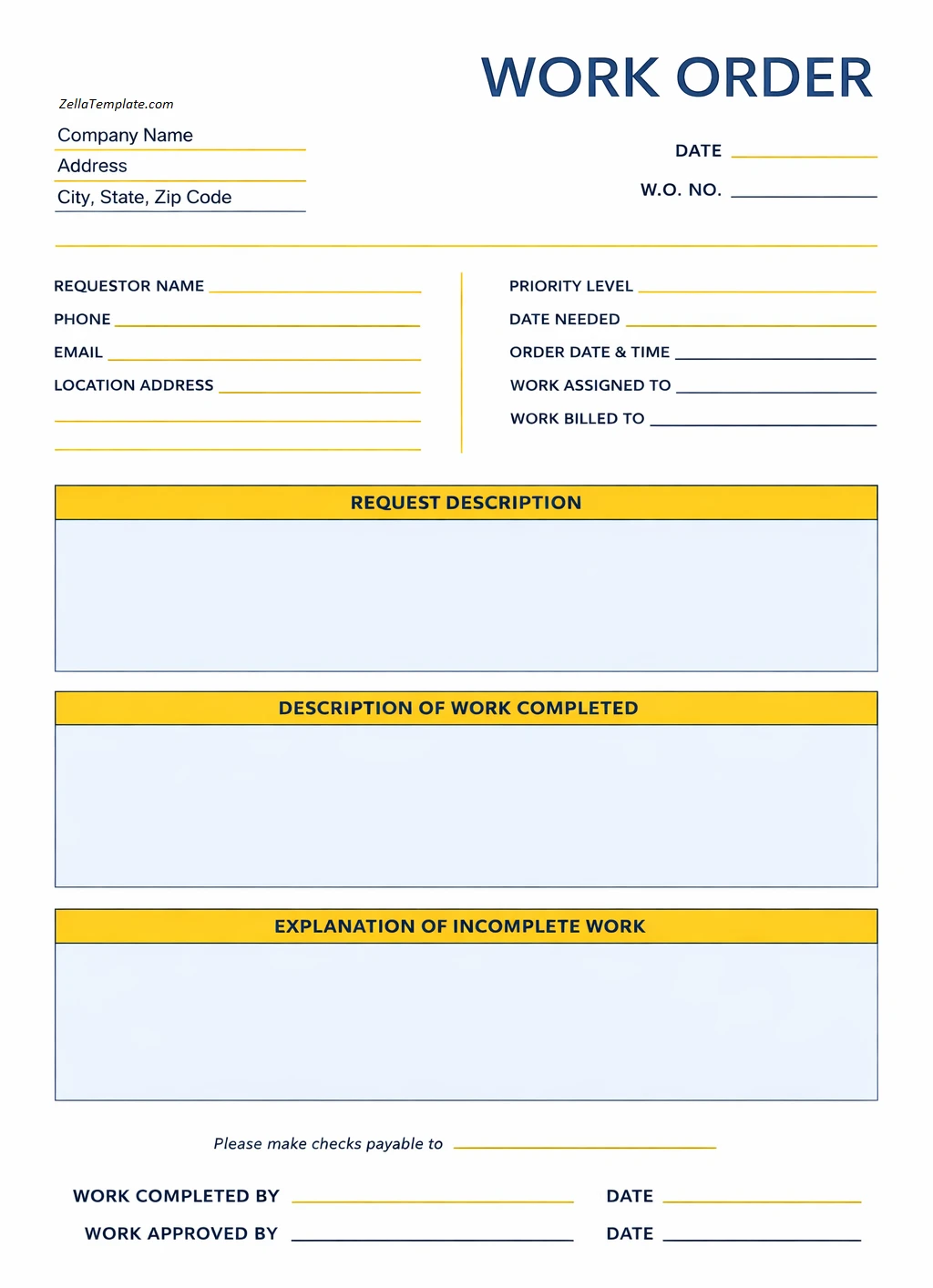
A Work Order Form helps you clearly document job requests, tasks, and service details in a professional and organized format. It provides space for outlining work descriptions, materials, labor, timelines, and authorization, ensuring clear communication between teams and clients. With a well-structured template, you can improve efficiency, reduce errors, and keep operations running smoothly.
Download our Work Order Template today to manage jobs efficiently and maintain clear records with confidence.
Work Order Template – DOWNLOAD