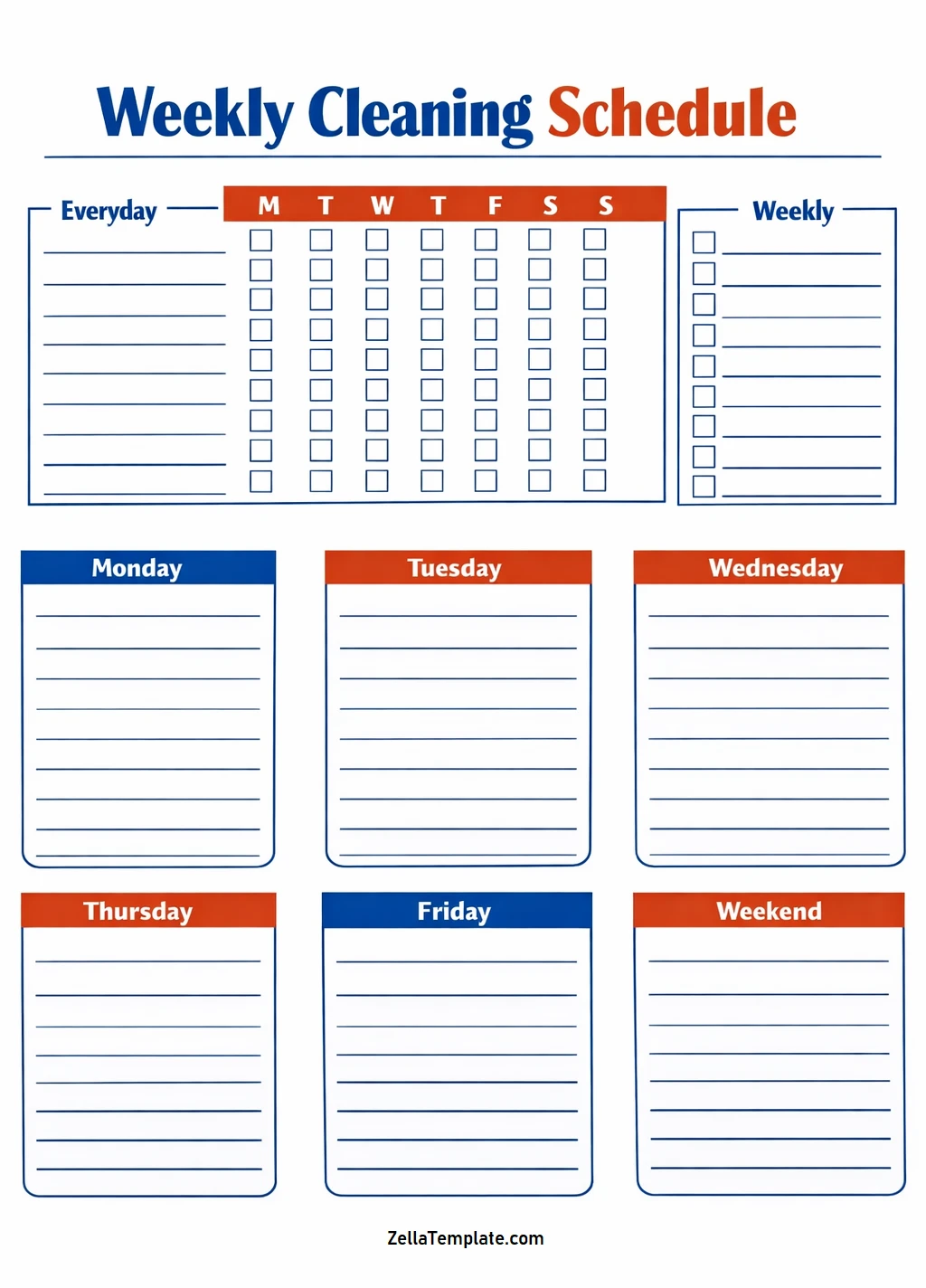
What is a Weekly Cleaning Schedule?
Keeping a clean and organized living space is not just about aesthetics; it also plays a crucial role in maintaining your physical and mental health.
Table of Contents
A weekly cleaning schedule is a strategic plan that breaks down various cleaning tasks into manageable parts and assigns them to specific days of the week. By following a structured cleaning routine, you can prevent the buildup of dirt and grime, reduce stress, and ensure that your home remains a healthy and welcoming environment.
Why Should You Implement a Weekly Cleaning Schedule?
At first glance, creating and sticking to a weekly cleaning schedule may seem like an additional chore on top of your already busy life. However, the benefits that come with maintaining a consistently clean and organized home far outweigh the effort required to establish a cleaning routine.
Consistency and Efficiency
One of the primary reasons to implement a weekly cleaning schedule is the consistency it provides. By breaking down cleaning tasks into smaller, more manageable parts and assigning them to specific days of the week, you can ensure that no area of your home is neglected for too long. This consistent approach to cleaning helps prevent the buildup of dirt and grime, making it easier to maintain a tidy living space.
Furthermore, a weekly cleaning schedule can significantly increase the efficiency of your cleaning routine. Rather than attempting to tackle all cleaning tasks at once, spreading them out over the week allows you to focus on one area at a time, making the process more manageable and less overwhelming.
Mental Well-being and Health Benefits
A clean and organized living space can have a positive impact on your mental well-being. Cluttered and dirty environments can contribute to feelings of stress and anxiety, while clean and organized spaces promote a sense of calm and relaxation. By maintaining a consistent cleaning routine, you can create a more peaceful and harmonious home environment that supports your overall well-being.
In addition to the mental health benefits, a weekly cleaning schedule also has numerous physical health benefits. Regular cleaning helps control dust, dirt, and germs, reducing the risk of illness and creating a healthier living environment for you and your family. By incorporating regular cleaning into your routine, you can create a more hygienic home that supports your overall health and well-being.
Key Elements of a Successful Weekly Cleaning Schedule
When creating a weekly cleaning schedule, there are several key elements to consider to ensure its success. From defining your cleaning goals to staying flexible with your routine, incorporating these elements into your cleaning schedule can help you maintain a consistently clean and organized living space.
Define Your Cleaning Goals
Before creating a weekly cleaning schedule, take some time to identify your cleaning priorities and goals. Determine which areas of your home require regular cleaning and establish a list of tasks that need to be completed each week. By defining your cleaning goals upfront, you can create a more focused and effective cleaning routine.
Consider factors such as high-traffic areas, specific cleaning tasks that are essential for maintaining a healthy living environment, and any areas of your home that require special attention. By clearly defining your cleaning goals, you can create a more targeted cleaning schedule that addresses your specific needs and priorities.
Break Tasks Into Manageable Parts
One of the key elements of a successful weekly cleaning schedule is breaking down cleaning tasks into smaller, more manageable parts. Rather than trying to tackle all cleaning tasks at once, divide them into daily or weekly segments to make them more manageable and less overwhelming.
For example, instead of dedicating an entire day to cleaning your entire house, assign specific tasks to each day of the week. This approach allows you to focus on one area at a time, making the cleaning process more efficient and less daunting. By breaking tasks into manageable parts, you can maintain a consistent cleaning routine without feeling overwhelmed by the sheer volume of work that needs to be done.
Set a Realistic Schedule
When creating a weekly cleaning schedule, it’s essential to be realistic about the time you have available for cleaning each day. Consider your work schedule, family commitments, and other responsibilities when planning your cleaning routine. Be honest with yourself about how much time you can realistically devote to cleaning each day and create a schedule that aligns with your lifestyle.
It’s also important to be flexible with your schedule and make adjustments as needed. Life can be unpredictable, and unexpected events or changes may arise that require you to modify your cleaning routine. By setting a realistic schedule and being flexible with your approach, you can create a cleaning routine that fits seamlessly into your lifestyle and is sustainable in the long term.
Delegate Tasks
If you live with others, consider delegating cleaning tasks to distribute the workload evenly. Assign specific tasks to each household member based on their abilities and availability. Communicate openly about expectations and responsibilities to ensure that everyone is on the same page about their cleaning duties.
Delegate tasks based on each person’s strengths and preferences. For example, if one person enjoys vacuuming but dislikes doing dishes, assign vacuuming tasks to that individual and designate dishwashing to someone else. By delegating tasks effectively, you can ensure that cleaning responsibilities are shared equitably among household members.
Stay Flexible
Life is full of unexpected twists and turns, and it’s essential to stay flexible with your cleaning schedule. Be prepared to adjust your routine as needed to accommodate changes in your schedule or unexpected events that may arise. If you fall behind on your cleaning tasks one week, don’t be too hard on yourself; instead, adjust your schedule and make up for missed tasks in the following week.
It’s also important to be open to feedback and suggestions from other household members. If someone suggests a more efficient way to tackle a particular cleaning task or offers to help with a specific chore, be willing to adapt your schedule and delegate tasks accordingly. By remaining flexible and open-minded, you can create a cleaning routine that works for everyone in your household.
How to Create a Weekly Cleaning Schedule
Creating a weekly cleaning schedule requires careful planning and consideration of your cleaning needs and priorities. By following these steps, you can develop a cleaning routine that works for you and helps you maintain a consistently clean and organized living space.
Assess Your Cleaning Needs
Start by taking a thorough inventory of your home and identifying areas that require regular cleaning. Consider high-traffic areas, such as the kitchen and bathrooms, as well as other frequently used spaces like living rooms and bedrooms. Make a list of cleaning tasks that need to be done on a daily, weekly, and monthly basis to keep your home clean and organized.
As you assess your cleaning needs, consider factors such as the size of your home, the number of household members, and any pets you may have. These factors can influence how often certain areas need to be cleaned and can help you prioritize tasks based on their importance and frequency.
Determine Your Cleaning Frequency
Decide how often each cleaning task needs to be done based on your cleaning needs and priorities. Some tasks, such as sweeping and mopping floors, may need to be done daily, while others, like deep cleaning the refrigerator or washing windows, can be done less frequently.
Consider factors such as the level of foot traffic in each area, the frequency of use, and any specific cleaning requirements for different areas of your home. By determining the appropriate cleaning frequency for each task, you can create a balanced cleaning schedule that ensures all areas of your home receive the attention they need.
Create a Cleaning Schedule
Once you have assessed your cleaning needs and determined the frequency of each task, it’s time to create a cleaning schedule. Divide your cleaning tasks into daily, weekly, and monthly categories, assigning specific tasks to each day of the week based on their importance and frequency.
When creating your cleaning schedule, consider factors such as your work schedule, family commitments, and other responsibilities. Be realistic about the time you have available for cleaning each day and allocate tasks accordingly. Spread out tasks evenly throughout the week to avoid feeling overwhelmed by trying to tackle everything at once.
Gather Cleaning Supplies
Before you begin implementing your weekly cleaning schedule, make sure you have all the necessary cleaning supplies and equipment on hand. Stock up on cleaning products such as all-purpose cleaner, disinfectant wipes, glass cleaner, and microfiber cloths, as well as essential tools like a vacuum cleaner, mop, and duster.
Organize your cleaning supplies in a caddy or basket to make them easy to transport from room to room. Having all your cleaning supplies readily accessible will save you time and ensure that you have everything you need to complete your cleaning tasks efficiently.
Stick to Your Schedule
Commit to following your weekly cleaning schedule to maintain a clean and organized home. Stay consistent with your routine and make cleaning a priority in your daily life. By sticking to your schedule and completing tasks as planned, you can prevent dirt and grime from accumulating and ensure that your home remains a healthy and welcoming environment.
If you find it challenging to stick to your cleaning schedule, try setting reminders or alarms to prompt you to complete tasks. Establishing a routine and making cleaning a habit can help you stay on track and maintain a consistently clean living space.
Reward Yourself
After completing each cleaning task, take a moment to appreciate your efforts and enjoy the results. Treat yourself to a small reward, such as a cup of tea, a piece of chocolate, or a few minutes of relaxation. By acknowledging your hard work and celebrating your accomplishments, you can make the cleaning process more enjoyable and rewarding.
Rewards can help motivate you to stay on track with your cleaning schedule and provide an incentive to complete tasks efficiently. Whether it’s a small treat or a brief break, taking time to reward yourself for completing cleaning tasks can make the process more satisfying and encourage you to continue maintaining a clean and organized home.
Evaluate and Adjust
Periodically review your weekly cleaning schedule to assess its effectiveness and make any necessary adjustments. Consider factors such as the time it takes to complete tasks, the cleanliness of your home, and any challenges you may have encountered. Use this feedback to refine your cleaning schedule and improve its efficiency and effectiveness.
If you find that certain tasks are taking longer than expected or that certain areas of your home are consistently neglected, make adjustments to your schedule to address these issues. Be open to feedback from other household members and incorporate their suggestions into your cleaning routine to create a schedule that works for everyone.
Tips for Successful Weekly Cleaning
In addition to following a structured weekly cleaning schedule, there are several tips and strategies you can use to maintain a clean and organized living space effectively. By incorporating these tips into your cleaning routine, you can make the process more manageable, efficient, and enjoyable.
Set a Timer
Use a timer to break up your cleaning tasks into manageable increments and stay on track with your schedule. Set a timer for each task to help you stay focused and motivated, and challenge yourself to complete tasks within a certain timeframe. By setting a timer, you can maintain a steady pace and prevent tasks from dragging on longer than necessary.
Timers can also help you avoid getting sidetracked or distracted while cleaning. By setting a specific amount of time for each task, you can stay focused on the task at hand and ensure that you complete all cleaning tasks efficiently.
Multi-task
Combine tasks where possible to save time and maximize efficiency. For example, while waiting for laundry to finish, you can use that time to wipe down kitchen counters or dust furniture. By multitasking and combining tasks, you can make the most of your cleaning time and accomplish more in less time.
Look for opportunities to streamline your cleaning routine by combining tasks that can be done simultaneously. For example, while vacuuming the living room, you can also dust shelves or clean windows. By multitasking and combining tasks, you can make your cleaning routine more efficient and free up time for other activities.
Involve Your Family
Get everyone in your household involved in the cleaning process to share the workload and promote a sense of teamwork. Assign specific tasks to each family member based on their abilities and preferences, and communicate openly about expectations and responsibilities.
Dividing cleaning tasks among family members can help distribute the workload and ensure that everyone contributes to maintaining a clean and organized home. By involving your family in the cleaning process, you can teach valuable life skills, promote a sense of responsibility, and create a sense of pride in your shared living space.
Stay Organized
Keep track of your cleaning schedule and supplies to avoid feeling overwhelmed or forgetting tasks. Use a planner, calendar, or cleaning app to schedule tasks and stay on top of your cleaning routine. Organize your cleaning supplies in a designated area to make them easy to access and use.
Having a designated cleaning schedule and organized cleaning supplies can help you stay on track with your cleaning routine and ensure that tasks are completed efficiently. By staying organized and keeping track of your cleaning schedule, you can maintain a clean and organized living space without feeling overwhelmed by the process.
Celebrate Your Accomplishments
Acknowledge your hard work and dedication to maintaining a clean and organized home. Take pride in your accomplishments and recognize the effort you put into keeping your living space tidy and welcoming. Reward yourself for completing cleaning tasks and celebrate your progress along the way.
Whether it’s treating yourself to a small indulgence, sharing your achievements with family members, or simply taking a moment to appreciate your clean and organized home, celebrating your accomplishments can help motivate you to continue maintaining a consistent cleaning routine. By recognizing your hard work and dedication, you can stay motivated and inspired to keep your home clean and organized.
Weekly Cleaning Schedule Template – DOWNLOAD