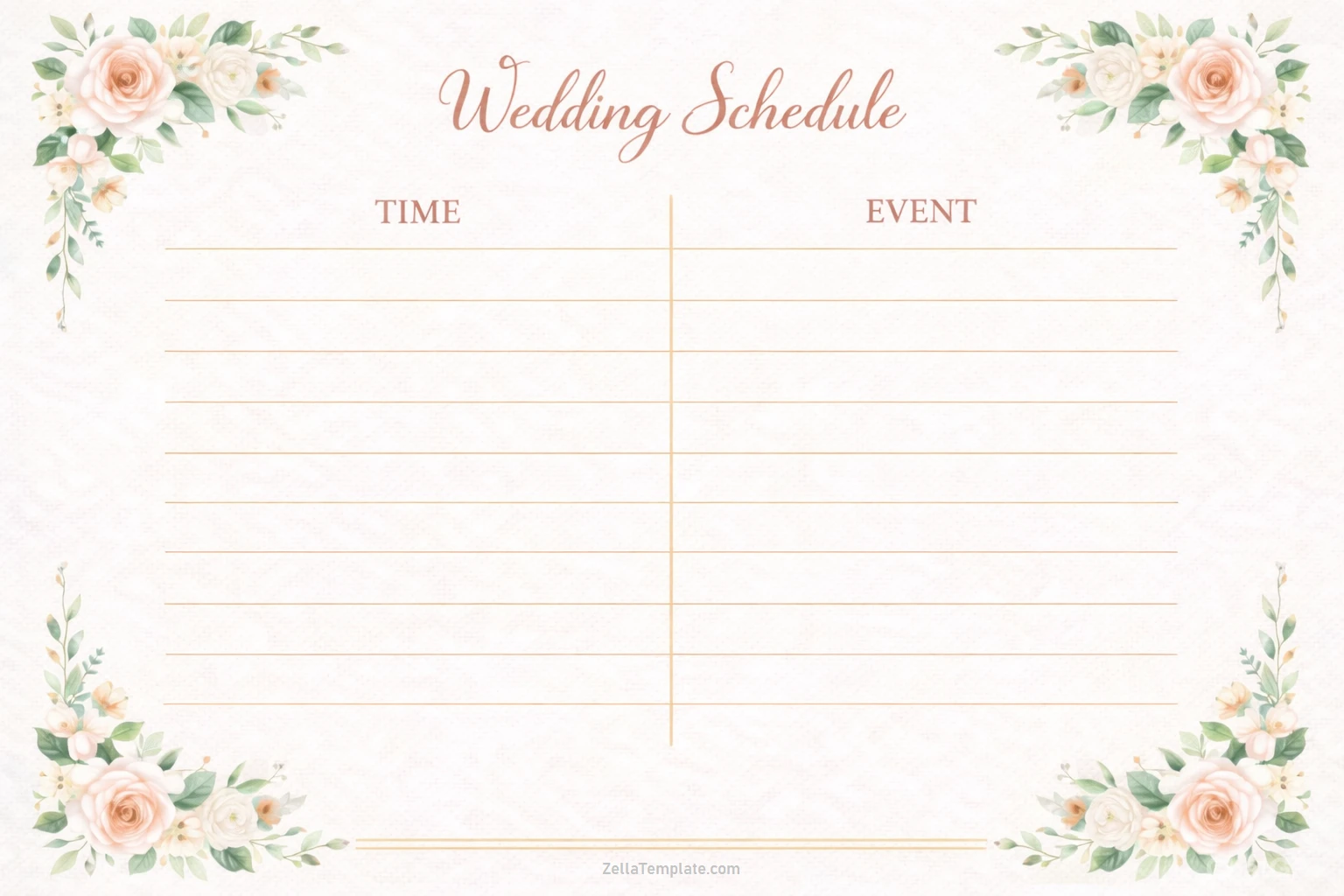
Planning a wedding can be an overwhelming task, but having a well-thought-out wedding schedule can make the day run smoothly and reduce stress for everyone involved.
Table of Contents
A wedding schedule, also known as a timeline, is a detailed hour-by-hour blueprint of the events of the day, from getting ready to the final exit. It helps coordinate vendors, the wedding party, and guests, prevent delays, and ensure there is enough time for photography and guest enjoyment.
In this guide, we will discuss the key elements of a wedding schedule, why it is important, and how to create one that works perfectly for your big day.
What is a Wedding Schedule?
A wedding schedule is not just a list of events; it is a meticulously organized timeline that ensures every aspect of the day is accounted for. It starts from the early morning preparations and culminates in the final farewell of the newlyweds.
This timeline is crucial for keeping the day on track, ensuring that everyone knows where they need to be and when. From the moment the bride starts getting ready to the last dance at the reception, the wedding schedule serves as a roadmap for a successful day.
Why is a Wedding Schedule Important?
Efficient Time Management
One of the key reasons why a wedding schedule is important is efficient time management. By creating a detailed timeline, couples can allocate the right amount of time to each activity, ensuring that everything stays on track. This includes getting ready, pre-ceremony photos, the ceremony itself, the reception, and any other planned events throughout the day. With a well-structured schedule, couples can make the most of every moment and ensure that their day is as memorable as possible.
Vendor Coordination
Another important aspect of a wedding schedule is vendor coordination. From florists to photographers to caterers, there are multiple vendors involved in a wedding, each with their own responsibilities and timelines. A wedding schedule helps to coordinate all these vendors, ensuring that they arrive on time, set up efficiently, and deliver their services according to plan. By communicating the schedule with vendors in advance, couples can minimize the risk of misunderstandings and ensure that everything runs smoothly on the day of the wedding.
Preventing Delays
Delays can be a significant source of stress on the day of the wedding. Whether it’s the bridal party running late, transportation issues, or unexpected hiccups, delays can quickly derail a carefully planned day. A wedding schedule helps to prevent delays by providing a clear timeline for everyone involved. By setting specific start times for each activity and building in buffer time for transitions, couples can minimize the risk of delays and keep the day on track. This proactive approach can help to reduce stress and ensure that the day unfolds smoothly.
Maximizing Time for Photography
Photography is a crucial element of any wedding, as it captures the memories that couples will cherish for a lifetime. A well-structured wedding schedule allows for ample time for photography sessions, ensuring that there is enough time to capture all the important moments of the day. From getting ready shots to formal portraits to candid moments throughout the day, a detailed schedule can help photographers plan their shots and ensure that no moment is missed. By maximizing time for photography, couples can create a beautiful visual record of their special day.
Enhancing Guest Enjoyment
Guest enjoyment is another important consideration when creating a wedding schedule. A well-planned timeline ensures that guests are engaged and entertained throughout the day, with a seamless flow of events that keep everyone involved. From the ceremony to the reception to the send-off, guests should feel welcome and included in the celebration. By considering the guest experience when creating a wedding schedule, couples can ensure that their loved ones have a memorable and enjoyable day.
Key Elements of a Wedding Schedule
Creating a detailed wedding schedule involves considering several key elements to ensure that the day runs smoothly. These elements are essential for coordinating all aspects of the wedding day and ensuring that every detail is accounted for. From the early morning preparations to the final send-off, each element plays a crucial role in creating a successful and memorable event.
Getting Ready
The getting ready portion of the day sets the tone for the rest of the wedding. It’s essential to allocate enough time for hair and makeup appointments for the bride and bridal party. This includes scheduling appointments for each member of the bridal party, as well as any additional services such as nails or massages. By allowing ample time for getting ready, couples can start the day on a relaxed note and ensure that everyone looks and feels their best.
Ceremony Details
The ceremony is the heart of the wedding day, and it’s essential to plan this portion of the schedule carefully. Include the start time of the ceremony, as well as any pre-ceremony activities such as a first look or family photos. Consider the length of the ceremony itself, as well as any readings, music, or rituals that will be included. By outlining the ceremony details in the wedding schedule, couples can ensure that this important moment is given the time and attention it deserves.
Reception Activities
The reception is a time for celebration and joy, and it’s important to plan out the timing of these activities in advance. Consider the flow of the reception, including the timing of the cocktail hour, dinner service, and important events such as speeches, cake cutting, and first dances. Allocate time for each activity, and make sure there is enough time for guests to enjoy each moment. By creating a detailed reception schedule, couples can ensure that the party runs smoothly and that everyone has a great time.
Photography Sessions
Photography is a key element of any wedding, as it captures the memories that will last a lifetime. Allow ample time in the schedule for formal portraits, as well as candid shots throughout the day. Consider the timing of the golden hour for outdoor photos, as well as any special locations that you want to include in your photo session. By working closely with your photographer and building in time for photography in the schedule, you can ensure that you have a beautiful collection of images to look back on.
Vendor Coordination
Coordinating with vendors is a crucial aspect of creating a successful wedding schedule. Communicate the schedule with all vendors to ensure they are aware of their responsibilities and know when to arrive and set up. Provide detailed information about the timeline of events, as well as any special requirements or requests you may have. By working closely with vendors and keeping them informed, you can ensure that everyone is on the same page and that the day runs smoothly.
Transportation Logistics
Transportation is an often overlooked aspect of wedding planning, but it’s essential to consider how everyone will get from one location to another on the day of the wedding. Arrange transportation for the bridal party, as well as any guests who may need assistance getting to and from the venue. Include details about pick-up times, drop-off locations, and any special instructions for drivers. By including transportation logistics in the wedding schedule, couples can ensure that everyone arrives at the right place at the right time.
Contingency Plan
Even with the best planning, unexpected things can happen on the day of the wedding. It’simportant to have a contingency plan in place to address any last-minute changes or unforeseen circumstances. Build in some buffer time in the schedule to account for delays or unexpected issues that may arise. Consider alternative options for outdoor activities in case of inclement weather, or have a backup plan for transportation in case of traffic or road closures. By preparing for potential challenges in advance, couples can navigate any obstacles that come their way and ensure that the day runs smoothly.
Tips for a Successful Wedding Schedule
Creating a successful wedding schedule requires careful planning, attention to detail, and effective communication. Here are some tips to help you create a wedding schedule that works perfectly for your big day:
Build in Extra Time
Allow for buffer time between activities to account for any delays or unexpected issues that may arise. By building in extra time, you can ensure that the day stays on track even if things don’t go exactly as planned. This buffer time can also provide a moment of relaxation and reflection for you and your partner amidst the hustle and bustle of the day.
Prioritize Must-Have Moments
Identify the key moments of the day that are most important to you and your partner, such as the ceremony, first dance, or speeches. Allocate more time to these must-have moments to ensure they are given the attention they deserve. By prioritizing these special moments, you can create lasting memories that you will cherish for years to come.
Communicate Clearly
Ensure that everyone involved in the wedding, including vendors, the wedding party, and guests, knows the schedule and their roles on the day. Provide clear instructions and timelines to avoid confusion and ensure that everyone is on the same page. Consider creating a detailed itinerary that outlines each event and includes contact information for key individuals.
Be Realistic
Avoid over-scheduling the day with too many activities or events. Be realistic about the time needed for each activity and allow for breaks and downtime throughout the day. Remember that it’s okay to have a few moments of rest amidst the excitement of the day. By being realistic about the schedule, you can create a day that is enjoyable and stress-free for everyone involved.
Enjoy the Moment
Remember to take breaks throughout the day to soak in the joy of your wedding day and spend time with your loved ones. Take a moment to appreciate the beauty of the day, the love that surrounds you, and the memories you are creating. Don’t get so caught up in the schedule that you forget to enjoy the moment. Take time to savor each special moment and create lasting memories with your partner, family, and friends.
Stay Flexible
While it’s important to have a detailed schedule in place, it’s also essential to be flexible and adaptable on the day of the wedding. Unexpected things can happen, and it’s important to roll with the punches and adjust as needed. Keep an open mind and a positive attitude, knowing that you have a plan in place but are willing to make changes if necessary. By staying flexible, you can navigate any challenges that arise with grace and ease.
Delegate Responsibilities
Don’t try to manage everything on your own on the day of the wedding. Delegate responsibilities to trusted friends, family members, or vendors to help ensure that everything runs smoothly. Assign someone to oversee the schedule, someone to handle any last-minute details, and someone to assist with any unexpected issues that may arise. By delegating responsibilities, you can focus on enjoying your day and creating lasting memories.
Communicate with Vendors
Keep in close contact with your vendors leading up to the wedding day to ensure they are aware of the schedule and any specific requirements you may have. Provide them with a copy of the schedule and confirm details such as arrival times, setup locations, and contact information. Keep lines of communication open so that vendors can reach out with any questions or concerns leading up to the day.
Take Breaks
Don’t forget to schedule breaks throughout the day to rest, relax, and recharge. Wedding days can be long and hectic, so it’s important to carve out time for yourself and your partner to take a breather. Whether it’s a quiet moment alone together, a quick snack, or a walk outside, taking breaks can help you stay refreshed and present throughout the day.
Have a Backup Plan
It’s always a good idea to have a backup plan in case of unexpected changes or challenges. Whether it’s inclement weather, a vendor cancellation, or a delay in the schedule, having a contingency plan can help you navigate any obstacles that come your way. Consider alternative options for key events, such as moving a ceremony indoors or changing the timing of photos, so that you are prepared for any scenario.
Stay Calm and Enjoy
Above all, remember to stay calm and enjoy the day. Your wedding is a celebration of love and commitment, and it’s important to savour every moment. Trust in the schedule you have created, but be willing to go with the flow and adapt as needed. Keep the focus on what truly matters – your partnership, your loved ones, and the joy of this special day. By staying present and enjoying the moment, you can create a truly unforgettable wedding day.
Conclusion
In conclusion, creating a perfect wedding schedule requires careful planning, attention to detail, and effective communication. By considering key elements such as getting ready time, ceremony details, reception activities, photography sessions, vendor coordination, transportation logistics, and contingency plans, couples can create a detailed timeline that ensures a smooth and successful day.
By following the tips for a successful wedding schedule, such as building in extra time, prioritizing must-have moments, communicating clearly, and staying flexible, couples can create a wedding day that is stress-free, enjoyable, and full of beautiful memories.
Remember to take breaks, delegate responsibilities, have a backup plan in place, and above all, stay calm and enjoy the moment. Your wedding day is a celebration of love and commitment, and by creating a well-organized and detailed schedule, you can ensure that it is a day to remember for all the right reasons. Enjoy every moment, savor every memory, and celebrate the beginning of a new chapter in your lives together.
Wedding Schedule Template – WORD