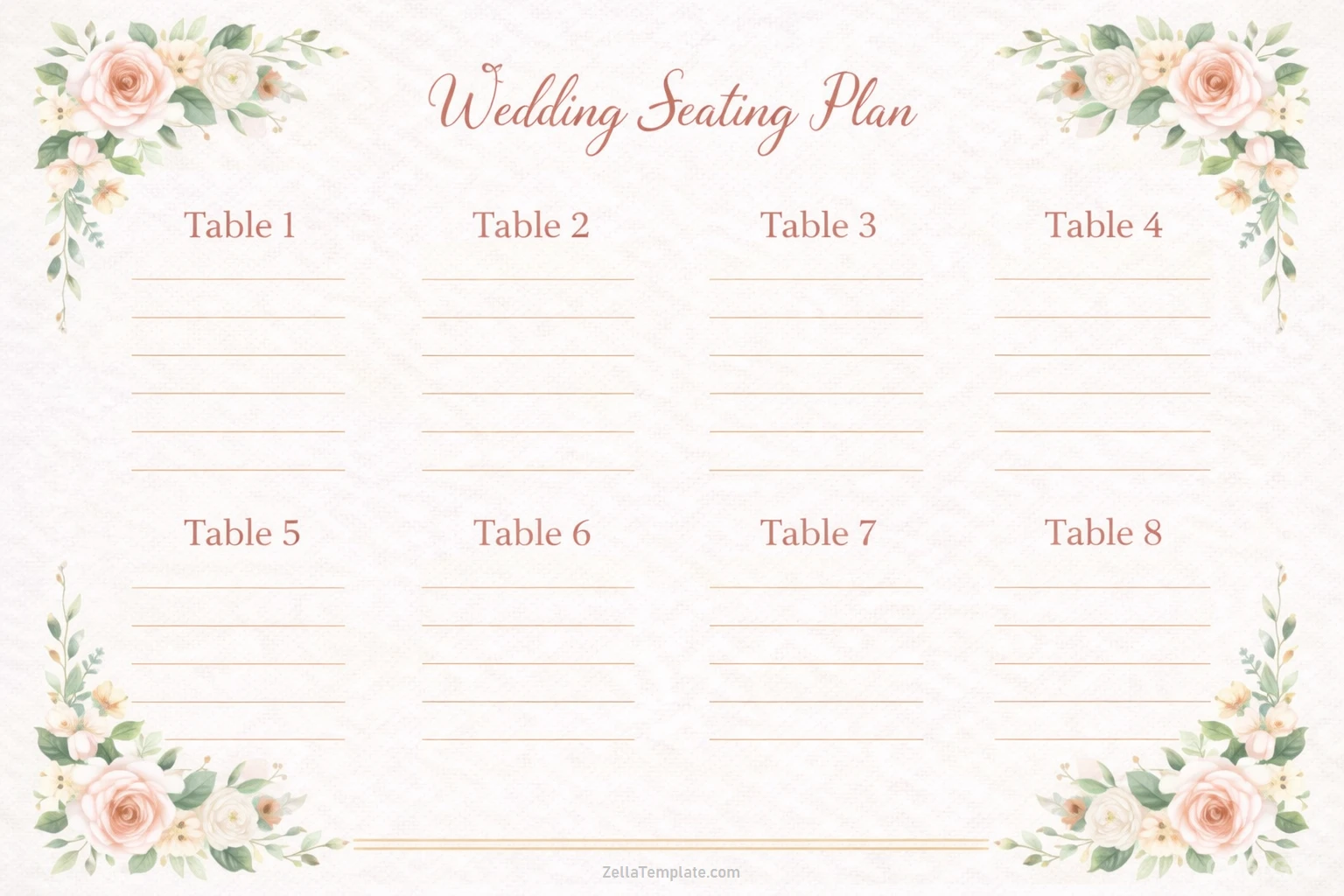
When planning a wedding, there are countless details to consider. From choosing the perfect dress to selecting the ideal venue, every decision plays a crucial role in creating a memorable and seamless event. One often overlooked aspect of wedding planning is the seating arrangement.
Table of Contents
However, a well-thought-out wedding seating plan can make a significant difference in ensuring a smooth reception, preventing chaos and awkwardness, and enhancing the overall guest experience.
What is a Wedding Seating Plan?
A wedding seating plan is a layout that assigns guests to specific seats or tables during the reception. It serves as a guide for guests to find their designated seating, minimizing confusion and creating a sense of order.
The seating plan also helps vendors, such as caterers and servers, by providing a structured layout for efficient service. Additionally, a thoughtfully designed seating plan can help avoid social friction by strategically seating guests with common interests or keeping potentially conflicting individuals apart.
Why You Need a Wedding Seating Plan
There are several compelling reasons why a wedding seating plan is essential for a successful reception:
- Prevents chaos and awkwardness: Without a seating plan, guests may struggle to find seats, leading to confusion and potential awkwardness.
- Enhances guest experience: A well-organized seating plan ensures that guests feel comfortable and valued, contributing to a positive overall experience.
- Helps vendors with service: By providing a clear layout of seating arrangements, vendors can efficiently deliver food and beverages to guests.
- Minimizes social friction: Strategic seating can help avoid potential conflicts or uncomfortable situations among guests.
- Ensures efficient catering service: For plated meals, a seating plan helps caterers deliver the right dishes to the correct guests without confusion.
- Serves as a decorative element: A well-designed seating plan can add a decorative touch to the reception space, enhancing the overall ambiance.
- Keeps the event on schedule: A structured seating plan helps maintain the flow of the reception and ensures that key events happen according to the timeline.
What to Include in Your Wedding Seating Plan
When creating a wedding seating plan, there are several key elements to consider:
- Guest list: Start by compiling a detailed guest list that includes names and any special considerations, such as dietary restrictions or relationships between guests.
- Table layout: Determine the layout of tables and assign guests to specific tables based on their relationships and preferences.
- Seating arrangement: Once tables are assigned, decide on the specific seating arrangement for each guest at the table.
- Escort cards or seating chart: Provide guests with escort cards or a seating chart that clearly displays their assigned table and seat.
- Communication: Clearly communicate the seating plan to guests in advance to avoid any confusion on the day of the wedding.
How to Create a Wedding Seating Plan
Creating a wedding seating plan can be a challenging task, but with careful planning and attention to detail, you can create a seamless and enjoyable experience for your guests:
- Start early: Begin working on your seating plan well in advance to allow time for revisions and adjustments.
- Consider guest preferences: Take into account any special requests or preferences from your guests when creating the seating arrangement.
- Balance personalities: When assigning seats, try to balance personalities and interests to create a harmonious atmosphere.
- Use a seating chart tool: Consider using online seating chart tools or software to help you visualize and organize your seating plan more effectively.
- Seek input: Don’t be afraid to seek input from family members or friends when creating the seating plan, as they may offer valuable insights.
- Be flexible: Remember that not everything may go according to plan on the day of the wedding, so be prepared to make any necessary last-minute adjustments.
Tips for a Successful Wedding Seating Plan
Here are some additional tips to ensure that your wedding seating plan is a success:
- Assign seats, not just tables: Assigning specific seats ensures that guests know exactly where to sit and minimizes confusion.
- Consider family dynamics: Be mindful of family dynamics and relationships when creating the seating plan to avoid any potential conflicts.
- Include a head table: Designate a head table for the bridal party and immediate family members to create a focal point at the reception.
- Label tables clearly: Use clear table numbers or names to help guests easily locate their assigned tables.
- Personalize the seating plan: Add personal touches, such as custom escort cards or a themed seating chart, to make the plan unique to your wedding.
- Have a backup plan: In case of any last-minute changes or seating issues, have a backup plan in place to quickly address any issues that may arise.
Conclusion
A well-planned wedding seating plan is an essential component of a successful reception. By carefully considering guest preferences, relationships, and dynamics, you can create a seating arrangement that enhances the overall guest experience, prevents chaos and awkwardness, and ensures efficient service for vendors.
With attention to detail and thoughtful planning, your wedding seating plan can be a seamless and enjoyable aspect of your special day.
Wedding Seating Plan Template – DOWNLOAD