In the competitive world of business, staying ahead of the curve is essential. One of the key tools that businesses can use to track and analyze their sales performance is a sales report.
Table of Contents
By collecting and presenting data on metrics like sales revenue, units sold, customer behavior, and market trends, businesses can evaluate the effectiveness of their strategies, uncover patterns, refine their approach, motivate teams, and ultimately drive revenue growth.
What Is Sales Reporting?
Sales reporting is the process of tracking and analyzing sales performance data to make informed decisions, improve strategies, forecast revenue, and identify areas for growth.
By creating and regularly updating sales reports, businesses can gain valuable insights into their sales activities and make adjustments to optimize their performance.
Why Is Sales Reporting Important?
Sales reporting is crucial for businesses of all sizes and industries for several reasons:
- Performance Evaluation: Sales reports provide a comprehensive overview of sales performance, allowing businesses to assess the effectiveness of their strategies and make data-driven decisions.
- Forecasting Revenue: By analyzing historical sales data, businesses can forecast future revenue and set realistic goals for growth.
- Identifying Areas for Growth: Sales reports can reveal opportunities for growth and expansion, helping businesses capitalize on new markets or customer segments.
- Improving Strategies: By analyzing sales data, businesses can identify trends and patterns that can help them refine their sales strategies and achieve better results.
- Motivating Teams: Sales reports can be used to motivate sales teams by setting clear targets, recognizing achievements, and providing insights into areas for improvement.
- Driving Revenue Growth: Ultimately, sales reporting is a powerful tool for driving revenue growth by enabling businesses to make informed decisions and optimize their sales performance.
The Different Types Of Sales Reports
There are several types of sales reports that businesses can create to track and analyze their sales performance:
- Sales Revenue Report: This report focuses on tracking the total revenue generated from sales over a specific period.
- Units Sold Report: This report provides insights into the number of units or products sold during a given time frame.
- Customer Behavior Report: This report analyzes customer interactions and behavior to understand buying patterns and preferences.
- Market Trends Report: This report examines market trends, competition, and external factors that may impact sales performance.
Steps To Create A Sales Report
Creating a comprehensive sales report involves several key steps:
1. Define Your Objectives:
Start by clarifying the goals and objectives of your sales report. What metrics do you want to track? What insights are you looking to gain?
2. Gather Data:
Collect sales data from various sources, including your CRM system, point of sale (POS) terminals, and other relevant tools.
3. Analyze The Data:
Use data visualization tools and analytics software to analyze the sales data and identify trends, patterns, and areas for improvement.
4. Create The Report:
Organize the data into a visually appealing and easy-to-understand format, such as charts, graphs, and tables.
5. Interpret The Results:
Interpret the findings of the report and draw conclusions that can inform your sales strategies and decision-making.
6. Share The Report:
Distribute the sales report to key stakeholders, such as sales teams, executives, and other relevant departments, to ensure alignment and accountability.
7. Review And Refine:
Regularly review and update your sales report to track progress, evaluate the effectiveness of your strategies, and make necessary adjustments for continuous improvement.
Conclusion
Sales reporting is a powerful tool that businesses can use to track and analyze their sales performance, make informed decisions, improve strategies, forecast revenue, and identify areas for growth. By collecting and presenting data on key metrics like sales revenue, units sold, customer behavior, and market trends, businesses can gain valuable insights that can help them drive revenue growth and stay ahead of the competition.
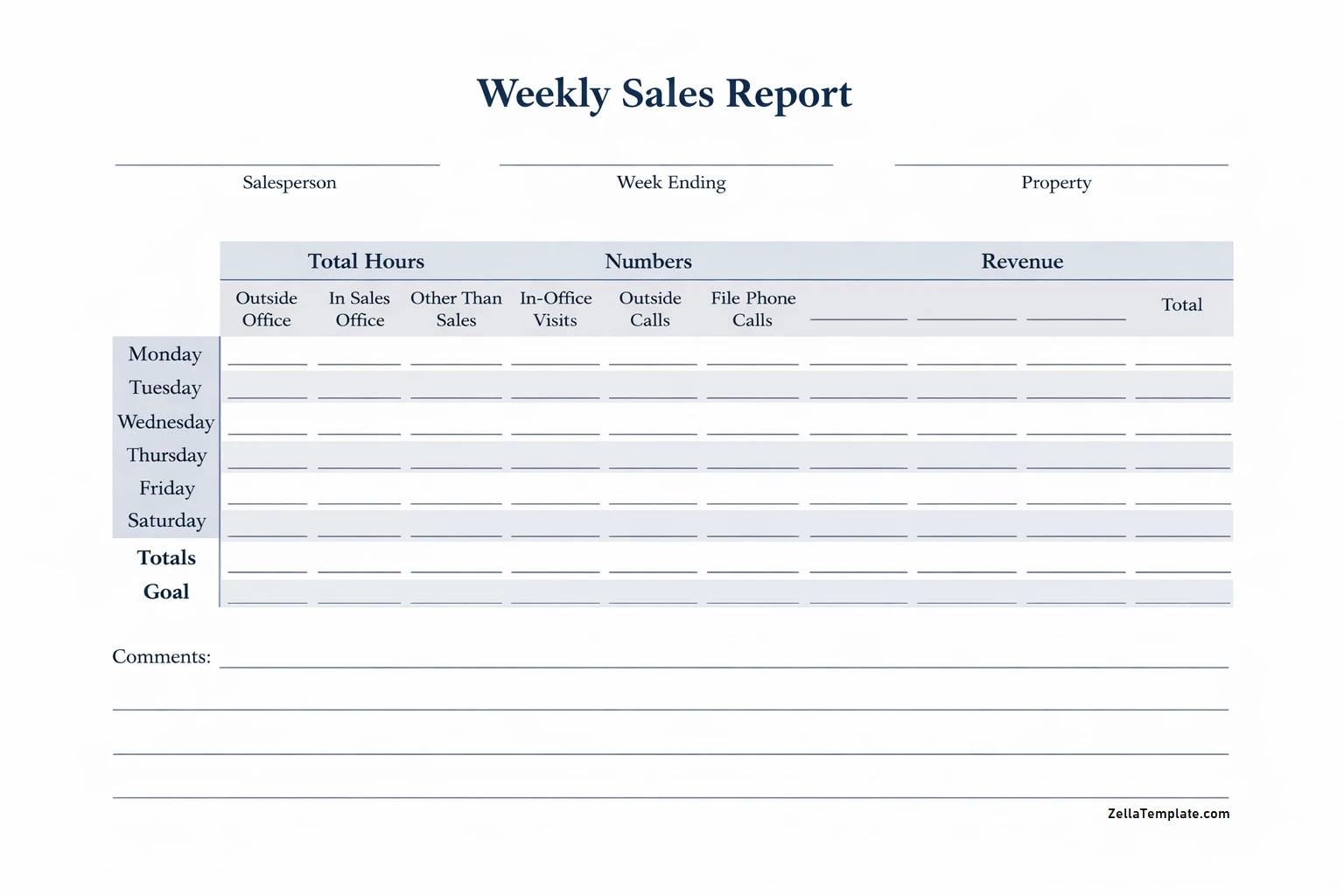
Weekly Sales Report Template – WORD